




















































BEAMALEVICH
5.0
Minimum 100 €
Gustav Klutsis ère soviétique acrylique construction spatiale petite sculpture constructiviste
Expédié directement par la marque en 3-6 jours
Protection de l'acheteur
Informations
Une sculpture mobile de bureau inspirée de la construction spatiale du constructiviste Gustav Klutsis. A monter soi-même. Une fois sortie de la boîte, la construction spatiale devient une partie vivante de l'environnement : vous pouvez la suspendre à une corde, la remodeler, l'afficher comme une sculpture constructiviste décorative ou expérimenter d'autres interactions. Le vide et la mobilité de la sculpture permettent la création d'images et de projections d'ombres uniques. Le croquis à partir duquel cette conception est née a été dessiné en 1921 par Gustav Klutsis et cherchait à être un « bâtiment en transformation », un outil architectural utile qui pourrait aider à anticiper la nouvelle vague de conceptions de bâtiments publics qui devaient être surélevés comme une partie de la nouvelle Russie soviétique de l’époque. Semblable aux Arkitektons suprématistes de Malévitch, la construction spatiale a la possibilité de changer de forme et de structure rapidement, permettant ainsi de multiples possibilités de création à l'artiste. Nous avons respecté cela en alignant séparément les deux feuilles rectangulaires concentriques à l'intérieur de la structure extérieure, ce qui permet à l'utilisateur de déplacer et d'agencer le centre de gravité de la sculpture à sa guise, symétriquement, vidée ou entièrement meublée de toutes ses parties.
Fabriqué en matériau acrylique, léger et résistant avec une légère élasticité. -- CARACTÉRISTIQUES
Taille: 24x5x5 cm
9,4x1,9x1,9 pouces
Poids : 250 g /0,55 livre
Matériau : méthacrylate semi-transparent découpé au laser
Acclamé pour ses constructions spatiales ainsi que pour ses conceptions de structures pratiques comme des kiosques, des tribunes et des radio-orateurs, Gustav Klutsis (Lettonie, 1895-1938) devient professeur de théorie des couleurs à l'école constructiviste VKhUTEMAS (Higher State Artistic- ateliers techniques) en 1924. En plus d'être un constructiviste accompli, Klutsis était devenu au début des années 1920 un pionnier du photomontage - travail pour lequel il est également connu. A desktop moving sculpture inspired by the Spatial Construction of constructivist Gustav Klutsis. To mount yourself. Once out of the box, the Spatial Construction becomes a living part of the environment - you can hang it from a string, reshape it newly, display it as a decorative Constructivist sculpture, or experiment with other interactions. The emptiness and mobility of the sculpture allow the creation of unique images and shadow projections. The sketch from which this design is born was drawn in 1921 by Gustav Klutsis, and it sought to be a 'morphing building', a helpful architectural tool that could help anticipating the new wave of designs for public buildings that were planned to be raised as a part of the new Soviet Russia of the time. Similar to Malevich's suprematist Arkitektons, the Spatial Construction has the possibility of changing shape and structure quickly, allowing multiple possibilities of creation for the artist. We have respected this by separately aligning the two concentric rectangular sheets inside the outer structure, which enables the user to move and arrange the center of gravity of the sculpture as desired, symmetrically, emptied, or fully furnished with all its parts.
Made from acrylic material, lightweight and resistant with a slight elasticity to it. -- SPECIFICATIONS
Size: 24 x 5 x 5 cm
9.4 x 1.9 x 1.9 in
Weight: 250 g /0.55 lb
Material: semitransparent laser-cut methacrylate
Acclaimed for his spatial constructions, as well as for his designs of practical structures like kiosks, tribunes, and radio-orators, Gustav Klutsis (Latvia, 1895-1938) became a professor of colour theory at the constructivist school VKhUTEMAS (Higher State Artistic-technical Workshops) in 1924. As well as being an accomplished constructivist, by the early 1920s Klutsis had become a pioneering developer of photomontage - work for which he is also known.
Fabriqué en matériau acrylique, léger et résistant avec une légère élasticité. -- CARACTÉRISTIQUES
Taille: 24x5x5 cm
9,4x1,9x1,9 pouces
Poids : 250 g /0,55 livre
Matériau : méthacrylate semi-transparent découpé au laser
Acclamé pour ses constructions spatiales ainsi que pour ses conceptions de structures pratiques comme des kiosques, des tribunes et des radio-orateurs, Gustav Klutsis (Lettonie, 1895-1938) devient professeur de théorie des couleurs à l'école constructiviste VKhUTEMAS (Higher State Artistic- ateliers techniques) en 1924. En plus d'être un constructiviste accompli, Klutsis était devenu au début des années 1920 un pionnier du photomontage - travail pour lequel il est également connu. A desktop moving sculpture inspired by the Spatial Construction of constructivist Gustav Klutsis. To mount yourself. Once out of the box, the Spatial Construction becomes a living part of the environment - you can hang it from a string, reshape it newly, display it as a decorative Constructivist sculpture, or experiment with other interactions. The emptiness and mobility of the sculpture allow the creation of unique images and shadow projections. The sketch from which this design is born was drawn in 1921 by Gustav Klutsis, and it sought to be a 'morphing building', a helpful architectural tool that could help anticipating the new wave of designs for public buildings that were planned to be raised as a part of the new Soviet Russia of the time. Similar to Malevich's suprematist Arkitektons, the Spatial Construction has the possibility of changing shape and structure quickly, allowing multiple possibilities of creation for the artist. We have respected this by separately aligning the two concentric rectangular sheets inside the outer structure, which enables the user to move and arrange the center of gravity of the sculpture as desired, symmetrically, emptied, or fully furnished with all its parts.
Made from acrylic material, lightweight and resistant with a slight elasticity to it. -- SPECIFICATIONS
Size: 24 x 5 x 5 cm
9.4 x 1.9 x 1.9 in
Weight: 250 g /0.55 lb
Material: semitransparent laser-cut methacrylate
Acclaimed for his spatial constructions, as well as for his designs of practical structures like kiosks, tribunes, and radio-orators, Gustav Klutsis (Latvia, 1895-1938) became a professor of colour theory at the constructivist school VKhUTEMAS (Higher State Artistic-technical Workshops) in 1924. As well as being an accomplished constructivist, by the early 1920s Klutsis had become a pioneering developer of photomontage - work for which he is also known.
| Longueur | 23 cm |
| Largeur | 1 cm |
| Hauteur | 2.5 cm |
| Poids | 22g |
| Couleur | White |
| Matériaux | Acryl |
| Fabriqué en | Espagne |
| Localisation de la marque | Espagne |
- Orderchamp vérifie et surveille attentivement toutes les marques présentes sur la plateforme
- Orderchamp agit en tant qu'intermédiaire lorsque vous achetez auprès de cette marque, ce qui signifie que nous interviendrons en cas de litige concernant votre commande avec cette marque
- Votre paiement est adressé à Orderchamp et ne sera reversé à la marque qu'une fois que vous aurez bien reçu votre commande

BEAMALEVICH
5.0
Minimum 100 €
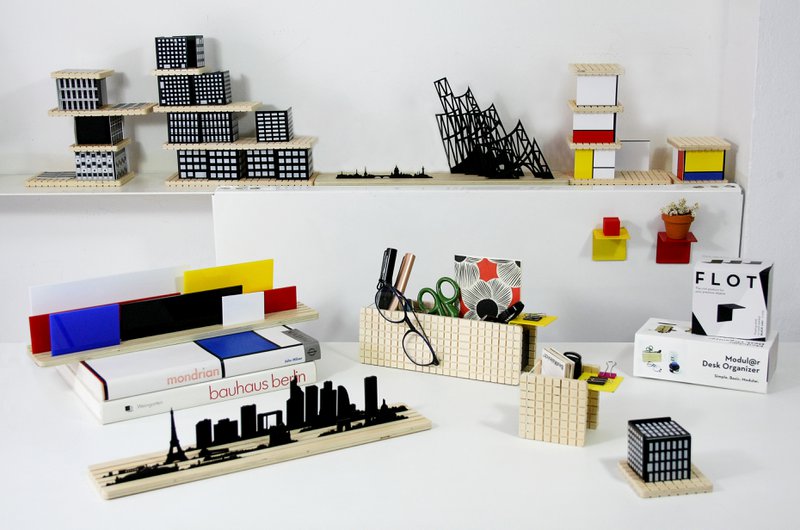
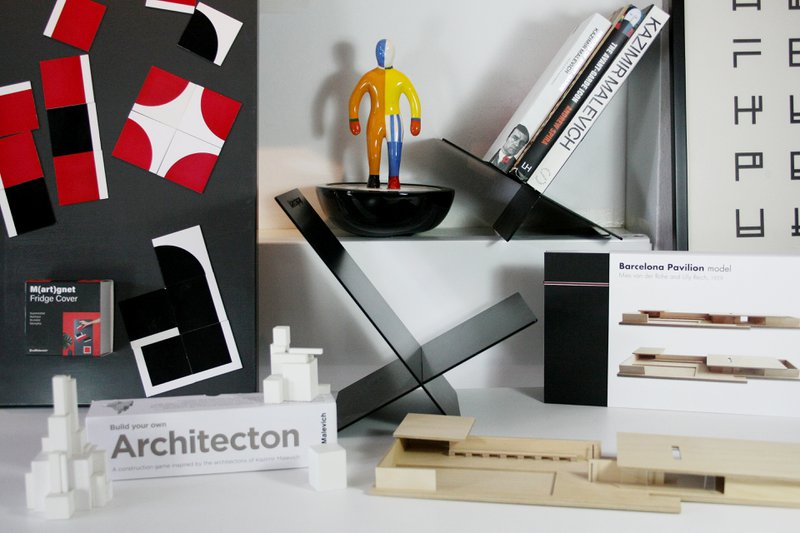
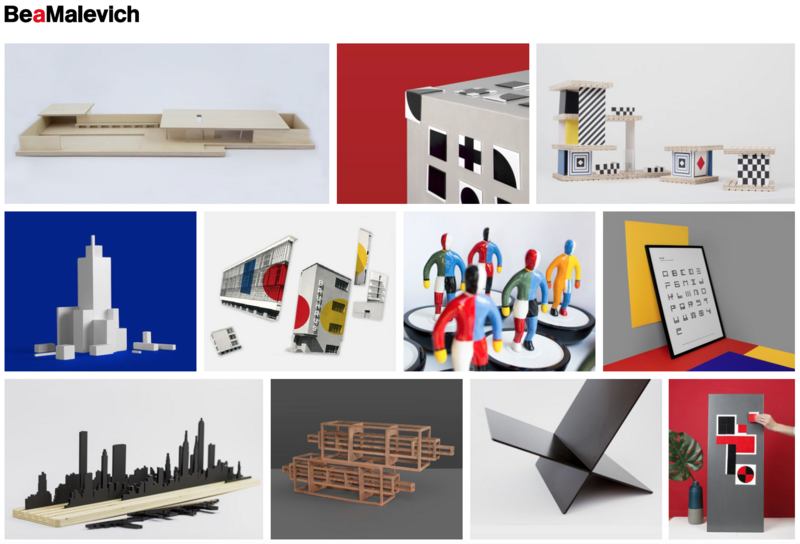
Nous sommes une équipe basée à Barcelone qui travaille à la création d'objets décoratifs design et à la réinvention d'objets du quotidien, dans le but d'éveiller la curiosité esthétique et culturelle des gens. Inspirés principalement — mais pas seulement — par des artistes européens du XXe siècle, nous travaillons en étroite collaboration avec des musées et institutions culturelles renommés, des boutiques conceptuelles et de vente au détail et des chaînes de magasins, qui nous aident à mieux connaître nos clients et à assister aux foires et expositions les plus importantes de notre secteur pour rester en tête pour l'avenir de l'art.