










Private wholesale
What is a B2B webshop?

What is B2B e-commerce?
B2B (business-to-business) refers to transactions between businesses, where products or services are sold from one company to another. Unlike B2C (business-to-consumer), B2B ecommerce involves businesses making purchases in bulk, typically for resale or further production.
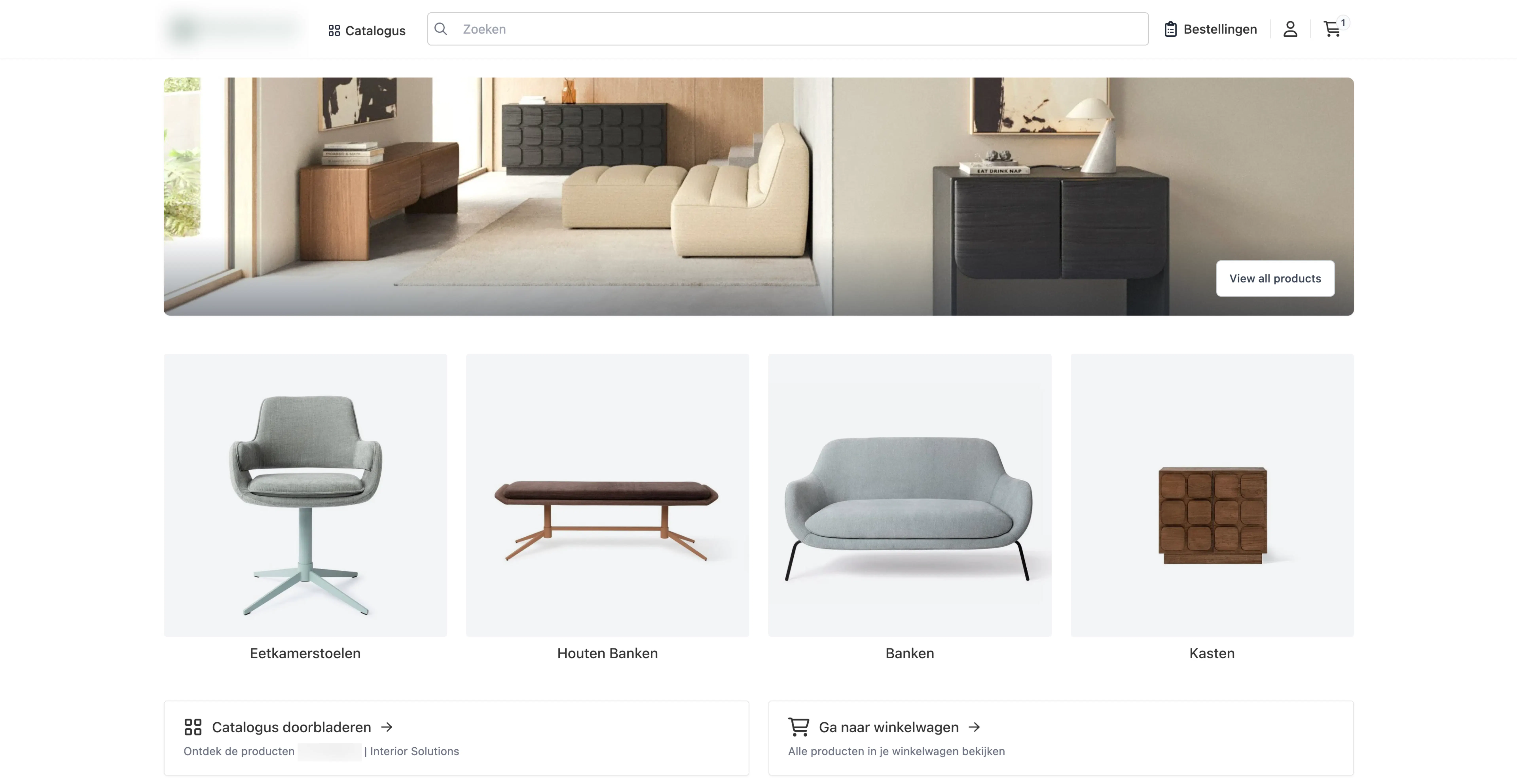
A B2B portal allows businesses to sell products directly to other businesses online, providing a streamlined shopping experience. By using an online B2B shop, businesses can automate their sales processes, track inventory, and offer personalized pricing, making it easier to manage large orders and fulfill customer needs.
A B2B portal allows businesses to sell products directly to other businesses online, providing a streamlined shopping experience. By using an online B2B shop, businesses can automate their sales processes, track inventory, and offer personalized pricing, making it easier to manage large orders and fulfill customer needs.
Types of B2B e-commerce
There are several types of B2B ecommerce models, including:
1. B2B2C (Business-to-Business-to-Consumer): This model involves businesses selling through other businesses to consumers. An example would be dropshipping where a consumer buys a product from a retailer who then purchases it from a supplier. This all happenst instantly as the retailer has a connection with he supplier’s catalog, so the consumer pays the retail price, then the retailer pays the wholesale price to the supplier and the supplier prepares and ships the order directly to the consumer.
2. Wholesale B2B: This is the most common form of B2B ecommerce, where businesses sell products (in bulk) to other businesses. For example, suppliers selling items to retailers who then sell them in their own online store or physical store. The difference between wholesale B2B and dropshipping is that the retailer will buy physical inventory from the supplier to fill their stock, whereas in dropshipping the retailer does not hold any physical inventory.
3. Private B2B Webshop: A private B2B webshop is a customized, closed platform where businesses sell their products to a select group of other business customers. This often includes features like private catalogs, personalized pricing, and secure login portals and gives suppliers more control over the distribution of their products.
2. Wholesale B2B: This is the most common form of B2B ecommerce, where businesses sell products (in bulk) to other businesses. For example, suppliers selling items to retailers who then sell them in their own online store or physical store. The difference between wholesale B2B and dropshipping is that the retailer will buy physical inventory from the supplier to fill their stock, whereas in dropshipping the retailer does not hold any physical inventory.
3. Private B2B Webshop: A private B2B webshop is a customized, closed platform where businesses sell their products to a select group of other business customers. This often includes features like private catalogs, personalized pricing, and secure login portals and gives suppliers more control over the distribution of their products.
Key features of a B2B webshop
When building a B2B online store, you need to ensure it has the essential features to support your business operations and meet your customers’ needs. Key features of a successful B2B webshop include:
- Custom pricing & catalogs: One of the main advantages of a B2B webshop is the ability to set customized prices and create product catalogs tailored to different customer segments. This helps businesses maximize revenue where their costs might be higher (e.g. farther geographic regions) and reward customer loyalty.
- Order management system: A wholesale order management system helps businesses efficiently track and process orders. Automating order fulfillment reduces manual work and ensures that customers receive their orders on time.
- Secure payment processing: A secure B2B portal ensures that transactions are protected and secure. A wholesale payment gateway integrated into your platform provides a safe environment for online payments, reducing the risk of fraud.
- ERP integration: ERP integration allows your B2B platform to sync with your existing ERP system, ensuring real-time stock visibility and price accuracy. This makes managing large product inventories and sales data seamless.
- Multi-currency & multi-language support: A multi-currency B2B platform makes it easier to manage transactions with international clients, while multi-language support enables you to cater to a global customer base.
- Self-service portal: With a self-service portal, customers can place orders, track deliveries, and manage their accounts, providing a smoother and more autonomous experience for both businesses and buyers. Minimum Order Quantities & Amounts: The ability to set order rules helps you to ensure profitable orders no matter where your customer is located. By setting a minimum order amount, you limit orders to a minimum value to ensure that your costs don’t inflate and that you don’t lose money on shipping.
- Custom pricing & catalogs: One of the main advantages of a B2B webshop is the ability to set customized prices and create product catalogs tailored to different customer segments. This helps businesses maximize revenue where their costs might be higher (e.g. farther geographic regions) and reward customer loyalty.
- Order management system: A wholesale order management system helps businesses efficiently track and process orders. Automating order fulfillment reduces manual work and ensures that customers receive their orders on time.
- Secure payment processing: A secure B2B portal ensures that transactions are protected and secure. A wholesale payment gateway integrated into your platform provides a safe environment for online payments, reducing the risk of fraud.
- ERP integration: ERP integration allows your B2B platform to sync with your existing ERP system, ensuring real-time stock visibility and price accuracy. This makes managing large product inventories and sales data seamless.
- Multi-currency & multi-language support: A multi-currency B2B platform makes it easier to manage transactions with international clients, while multi-language support enables you to cater to a global customer base.
- Self-service portal: With a self-service portal, customers can place orders, track deliveries, and manage their accounts, providing a smoother and more autonomous experience for both businesses and buyers. Minimum Order Quantities & Amounts: The ability to set order rules helps you to ensure profitable orders no matter where your customer is located. By setting a minimum order amount, you limit orders to a minimum value to ensure that your costs don’t inflate and that you don’t lose money on shipping.
Why do you need a B2B e-commerce platform?
Having a B2B website or B2B shop template is essential for modern businesses that want to stay competitive in the digital age. A B2B sales platform allows you to:
- Offer a more streamlined purchasing experience for your clients.
- Automate order processing and minimize manual tasks.
- Easily manage customer accounts and sales data.
- Provide personalized pricing, catalogs, and promotions to different customer segments.
Building a B2B webshop can save time, reduce errors, and help you manage your wholesale business more effectively.
- Offer a more streamlined purchasing experience for your clients.
- Automate order processing and minimize manual tasks.
- Easily manage customer accounts and sales data.
- Provide personalized pricing, catalogs, and promotions to different customer segments.
Building a B2B webshop can save time, reduce errors, and help you manage your wholesale business more effectively.
B2B e-commerce vs. B2C e-commerce: What’s the difference?
While B2B ecommerce refers to transactions between businesses, B2C ecommerce (business-to-consumer) is where businesses sell directly to individual consumers. B2B platforms are designed to handle the unique complexities of business transactions, including larger order volumes, minimum order quantities, invoicing, personalized pricing, and the need for customized catalogs.
A B2B website builder provides the necessary tools to create a platform that meets these needs, offering specific features that B2C platforms do not. If you’re selling to other businesses, a B2B solution will make your operations much more efficient and cost-effective.
A B2B website builder provides the necessary tools to create a platform that meets these needs, offering specific features that B2C platforms do not. If you’re selling to other businesses, a B2B solution will make your operations much more efficient and cost-effective.
How to build a B2B webshop for your wholesale business
Building a B2B webshop requires the right platform and tools to ensure a seamless experience for both you and your customers. When setting up your wholesale ecommerce platform, consider:
- Customizable B2B store features: Choose a platform that allows you to tailor your online store to your specific needs, such as product catalogs, pricing, and payment options.
- Integration with existing systems: Ensure your platform can integrate with your current ERP and CRM systems for smooth data transfer and management.
- B2B sales channels: Consider how your B2B sales channels (such as email, mobile apps, and in-store systems) will integrate with your online store.
- Customizable B2B store features: Choose a platform that allows you to tailor your online store to your specific needs, such as product catalogs, pricing, and payment options.
- Integration with existing systems: Ensure your platform can integrate with your current ERP and CRM systems for smooth data transfer and management.
- B2B sales channels: Consider how your B2B sales channels (such as email, mobile apps, and in-store systems) will integrate with your online store.
The future of B2B e-commerce
The growth of B2B ecommerce shows no signs of slowing down. As more businesses shift to B2B platforms, the need for seamless, integrated solutions has never been more important. With the right B2B platform, you can scale your business, expand your reach, and provide a better experience for your customers.

What is the Order Portal?
How does it work?
How does the Order Portal differ from a regular website?
What features does the Order Portal have?
Are there more B2B features coming?
What payment methods can I accept through the Order Portal?
Can I customize the look & feel of my Order Portal?
Can I also use it for B2C sales?
Can I integrate the Order Portal with my existing ERP or accounting system?
How much does the Order Portal cost?
Can I cancel my subscription at any time?