




















































BEAMALEVICH
5.0
Mínimo € 100
Gustav Klutsis Era soviética Construcción espacial acrílica Pequeña escultura constructivista
Se envía directamente desde la marca en 3-6 días
Protección al consumidor
Información
Una escultura móvil de escritorio inspirada en la Construcción Espacial del constructivista Gustav Klutsis. Para montarte tú mismo. Una vez fuera de la caja, la Construcción Espacial se convierte en una parte viva del entorno: puedes colgarla de una cuerda, remodelarla, exhibirla como una escultura constructivista decorativa o experimentar con otras interacciones. El vacío y la movilidad de la escultura permiten la creación de imágenes únicas y proyecciones de sombras. El boceto del que nace este diseño fue elaborado en 1921 por Gustav Klutsis, y buscaba ser un 'edificio morphing', una útil herramienta arquitectónica que pudiera ayudar a anticipar la nueva ola de diseños de edificios públicos que se planeaba levantar como parte de la nueva Rusia soviética de la época. Al igual que los Arkitektons suprematistas de Malevich, la Construcción Espacial tiene la posibilidad de cambiar de forma y estructura rápidamente, permitiendo múltiples posibilidades de creación para el artista. Hemos respetado esto alineando por separado las dos láminas rectangulares concéntricas dentro de la estructura exterior, lo que permite al usuario mover y disponer el centro de gravedad de la escultura como desee, de forma simétrica, vacía o completamente amueblada con todas sus partes.
Fabricado en material acrílico, ligero y resistente con una ligera elasticidad. -- ESPECIFICACIONES
Tamaño: 24x5x5cm
9,4 x 1,9 x 1,9 pulgadas
Peso: 250 g/0,55 libras
Material: metacrilato semitransparente cortado a láser
Aclamado por sus construcciones espaciales, así como por sus diseños de estructuras prácticas como quioscos, tribunas y radiooradores, Gustav Klutsis (Letonia, 1895-1938) se convirtió en profesor de teoría del color en la escuela constructivista VKhUTEMAS (Superior Artística Estatal). Talleres técnicos) en 1924. Además de ser un constructivista consumado, a principios de la década de 1920 Klutsis se había convertido en un desarrollador pionero del fotomontaje, trabajo por el que también es conocido. A desktop moving sculpture inspired by the Spatial Construction of constructivist Gustav Klutsis. To mount yourself. Once out of the box, the Spatial Construction becomes a living part of the environment - you can hang it from a string, reshape it newly, display it as a decorative Constructivist sculpture, or experiment with other interactions. The emptiness and mobility of the sculpture allow the creation of unique images and shadow projections. The sketch from which this design is born was drawn in 1921 by Gustav Klutsis, and it sought to be a 'morphing building', a helpful architectural tool that could help anticipating the new wave of designs for public buildings that were planned to be raised as a part of the new Soviet Russia of the time. Similar to Malevich's suprematist Arkitektons, the Spatial Construction has the possibility of changing shape and structure quickly, allowing multiple possibilities of creation for the artist. We have respected this by separately aligning the two concentric rectangular sheets inside the outer structure, which enables the user to move and arrange the center of gravity of the sculpture as desired, symmetrically, emptied, or fully furnished with all its parts.
Made from acrylic material, lightweight and resistant with a slight elasticity to it. -- SPECIFICATIONS
Size: 24 x 5 x 5 cm
9.4 x 1.9 x 1.9 in
Weight: 250 g /0.55 lb
Material: semitransparent laser-cut methacrylate
Acclaimed for his spatial constructions, as well as for his designs of practical structures like kiosks, tribunes, and radio-orators, Gustav Klutsis (Latvia, 1895-1938) became a professor of colour theory at the constructivist school VKhUTEMAS (Higher State Artistic-technical Workshops) in 1924. As well as being an accomplished constructivist, by the early 1920s Klutsis had become a pioneering developer of photomontage - work for which he is also known.
Fabricado en material acrílico, ligero y resistente con una ligera elasticidad. -- ESPECIFICACIONES
Tamaño: 24x5x5cm
9,4 x 1,9 x 1,9 pulgadas
Peso: 250 g/0,55 libras
Material: metacrilato semitransparente cortado a láser
Aclamado por sus construcciones espaciales, así como por sus diseños de estructuras prácticas como quioscos, tribunas y radiooradores, Gustav Klutsis (Letonia, 1895-1938) se convirtió en profesor de teoría del color en la escuela constructivista VKhUTEMAS (Superior Artística Estatal). Talleres técnicos) en 1924. Además de ser un constructivista consumado, a principios de la década de 1920 Klutsis se había convertido en un desarrollador pionero del fotomontaje, trabajo por el que también es conocido. A desktop moving sculpture inspired by the Spatial Construction of constructivist Gustav Klutsis. To mount yourself. Once out of the box, the Spatial Construction becomes a living part of the environment - you can hang it from a string, reshape it newly, display it as a decorative Constructivist sculpture, or experiment with other interactions. The emptiness and mobility of the sculpture allow the creation of unique images and shadow projections. The sketch from which this design is born was drawn in 1921 by Gustav Klutsis, and it sought to be a 'morphing building', a helpful architectural tool that could help anticipating the new wave of designs for public buildings that were planned to be raised as a part of the new Soviet Russia of the time. Similar to Malevich's suprematist Arkitektons, the Spatial Construction has the possibility of changing shape and structure quickly, allowing multiple possibilities of creation for the artist. We have respected this by separately aligning the two concentric rectangular sheets inside the outer structure, which enables the user to move and arrange the center of gravity of the sculpture as desired, symmetrically, emptied, or fully furnished with all its parts.
Made from acrylic material, lightweight and resistant with a slight elasticity to it. -- SPECIFICATIONS
Size: 24 x 5 x 5 cm
9.4 x 1.9 x 1.9 in
Weight: 250 g /0.55 lb
Material: semitransparent laser-cut methacrylate
Acclaimed for his spatial constructions, as well as for his designs of practical structures like kiosks, tribunes, and radio-orators, Gustav Klutsis (Latvia, 1895-1938) became a professor of colour theory at the constructivist school VKhUTEMAS (Higher State Artistic-technical Workshops) in 1924. As well as being an accomplished constructivist, by the early 1920s Klutsis had become a pioneering developer of photomontage - work for which he is also known.
| Longitud | 23 cm |
| Anchura | 1 cm |
| Altura | 2.5 cm |
| Peso | 22g |
| Color | White |
| Material | Acryl |
| Fabricado en | España |
| Ubicación de la marca | España |
- Orderchamp verifica y supervisa cuidadosamente todas las marcas de la plataforma
- Orderchamp actúa como intermediario cuando usted compra a esta marca, lo que significa que mediará en caso de disputas relacionadas con su pedido con esta marca
- Su pago se realiza a Orderchamp y solo se transferirá a la marca una vez que haya recibido correctamente su pedido

BEAMALEVICH
5.0
Mínimo € 100
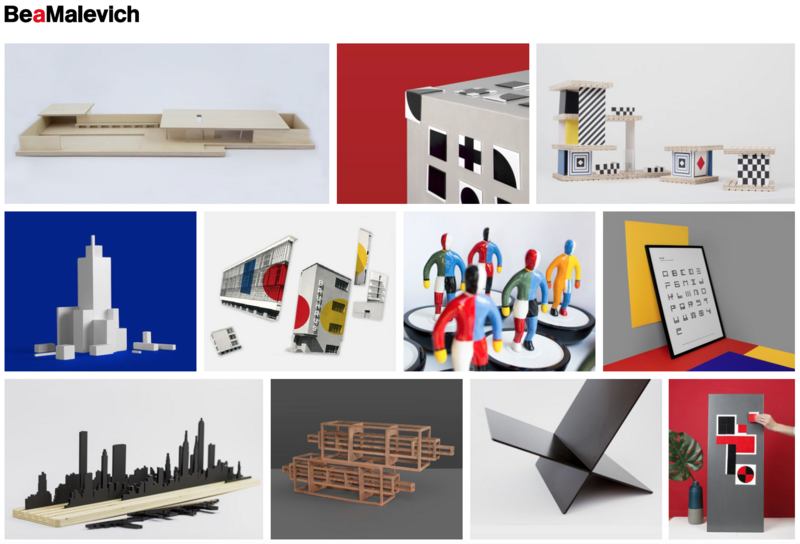
Somos un equipo con sede en Barcelona que trabaja en la creación de elementos decorativos de diseño y en la reinvención de objetos cotidianos, con el objetivo de despertar la curiosidad estética y cultural de las personas. Inspirándonos principalmente —pero no solo— en artistas europeos del siglo XX, trabajamos en estrecha colaboración con museos e instituciones culturales de renombre, tiendas conceptuales y minoristas y cadenas de tiendas, que nos ayudan a conocer mejor a nuestros clientes y a asistir a las ferias y exposiciones más importantes de nuestro sector para estar a la vanguardia del futuro del arte.