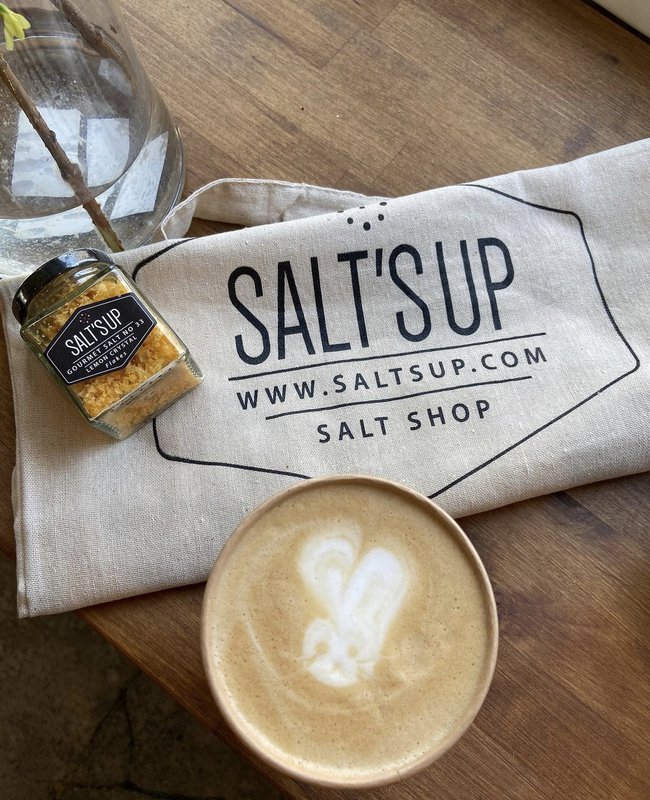























































SaltsUp Gourmet salts and peppers
4.7
Geen minimum
CUBEB peper
Verzending direct vanaf merk in 1-3 dagen
Kopersbescherming
Informatie
Wat is Cubeb-peper? Cubeb-peper, of Piper cubeba, is een specerij die wordt gebruikt om voedsel en dranken op smaak te brengen. Hij komt uit de familie Piperaceae en is geclassificeerd als peperplant. Vanwege het taps toelopende uiteinde wordt de cubebpaprika ook wel staartpaprika genoemd. Cubeb-bes is een andere titel om de besachtige vorm aan te duiden. In India wordt het kruid kabab chini genoemd. Piper Cubeba Smaakprofiel Cubeb-peper bevat terpenen, of aromatische plantaardige stoffen, verder onderverdeeld in monoterpenen en sesquiterpenen. Dit is de reden voor de houtachtige geur en smaak van het kruid. Piper cubeba zal eerst een beetje kruidig smaken, gevolgd door een beetje bitter. Vervolgens komt er een zuivere, bijna eucalyptussmaak naar voren, met een vleugje citrussmaak. Velen vergelijken de smaak ervan met een kruising tussen zwarte peper en piment. Cubeb-peper versus zwarte peper Cubeb-peper is niet zo heet als zwarte peper. Het scoort slechts een drie op tien op het gebied van warmte. Zwarte peper bevat veel piperidines, een natuurlijk voorkomende organische verbinding, waaronder de alkaloïde peperine, die een peperige smaak afgeeft. Cubebpeper bevat dit daarentegen helemaal niet. Hoe Cubeb-peper te bewaren Bewaar de hele specerij op een koele, droge plaats gedurende maximaal 3 jaar. Indien vers gemalen, binnen drie tot zes maanden gebruiken. Zorg ervoor dat je peper altijd in een glazen fles zit, met een goed sluitend deksel, zoals die van Salt’s Up! Bewaar het vervolgens op een koele, droge plaats, uit de buurt van zonlicht. Lees meer over deze kleine bes De Cubeb-paprika heeft een kleurrijke geschiedenis en een uniek groeipatroon. Hoe wordt Cubeb-peper precies gebruikt bij het koken? Wat zijn de gezondheidseigenschappen? Lees verder! Historische achtergrond van de Java-peper Java en andere eilanden uit Indonesië zijn altijd de belangrijkste bron van deze staartpaprika geweest. Om de gewaardeerde Cubeb-bes economisch in zijn greep te houden, steriliseerden boeren zaden. Hierdoor werd voorkomen dat het zaad van de Javaanse peper werd gestolen en in vreemde grond werd geplant. De oud-Griekse geschriften van de filosoof Theophrastus, die stierf in 287 voor Christus, illustreren dat de Grieken handel dreven met Java en dat de cubebbes werd gebruikt. De koning van Portugal, die een sterke handelsband met India wilde opbouwen, weigerde cubeb-peper uit Java te importeren. In plaats daarvan stond de koning alleen de import van zwarte peper uit zijn economische partner India toe. Dergelijke embargo's worden aangehaald als reden voor de afname van de populariteit van cubebpeper in de 16e eeuw. Het verklaart ook waarom zwarte peper naast zout zit - in een zout- en peperstrooierset! Hoe wordt Piper Cubeba gekweekt? De boom kan tot 10 meter hoog worden en geeft de voorkeur aan rijke, vochtige grond. Deze staartpaprika, die ooit exclusief voor Indonesië was, wordt nu verbouwd in India, de Kleine Antillen, Maleisië en Sri Lanka. De dikke rubberachtige bladeren van de boom zijn donkergroen en op de vervaldag 15 centimeter lang. Tijdens de bloei is de boom versierd met witte bloesems en kleine bessen van vijf millimeter. Deze staartbessen zijn iets groter dan een peperkorrel. Deze bessen worden vlak voor de rijpheid geplukt, als ze nog groen zijn, en laten ze in de zon drogen. Eenmaal gedroogd worden de bessen gerimpeld en zwart. Hoe gebruik je de Cubeb Bes Cubeb peper kan in zijn geheel gebruikt worden, geplet of samen met andere kruiden toegevoegd worden om een zelfgemaakte kruidenmix te creëren. Deze staartpaprika wordt vers gemalen en gebruikt om gerechten op smaak te brengen in Indonesië en Maleisië. Daar heeft het de voorkeur boven zwarte peper. Tegenwoordig wordt deze specerij meer gebruikt in gastronomische restaurants, waar professionele koks nieuwe smaken proberen toe te voegen die verder gaan dan de traditionele zwarte peper. Het is een feit! Deze peper wordt ook gebruikt bij de productie van gin en sigaren. De gevarieerde toepassingen bij het koken Cubeb-peper komt het vaakst voor in de keukens van Noord-Afrika en Azië. In de Marokkaanse keuken voegt de peper bijvoorbeeld een smaakvolle smaak toe aan tagines en verschillende andere recepten. In Azië wordt het vaak gebruikt als onderdeel van de specerij in een curry. In Australië is het voor restaurantchefs trendy om ingrediënten uit de outback of het tropische regenwoud te kopen voor verleidelijke smaken. Cubeb-peper duikt dus overal op het continent op vanwege zijn exotische smaak. Cubeb-peper in Europese en Noord-Amerikaanse keukens Cubeb-peper is nog geen gangbaar ingrediënt in Europese en Noord-Amerikaanse gerechten. Toch kan gemalen cubeb-peper rijst en groenten verlevendigen, maar ook zeevruchten, lamsvlees, eend en een grote verscheidenheid aan stoofschotels. Om groente-, kippen- of runderbouillon te maken, voegt u zes tot acht hele cubebbessen toe aan elke liter water. Eenmaal klaar, zeef de cubeb-paprika's samen met het andere ingrediënt in de bouillon. In zoete toepassingen past het goed bij fruit en bij de samenstelling van verschillende soorten ijs, sorbets en gelatos. Zeef de bessen met de staart eruit voordat u ze aan de ijsmachine toevoegt. Cubebpeper werkt ook goed in glühwein tijdens de wintermaanden. Gebruik een lichte rode wijn en verwarm deze met kaneelstokjes, sinaasappelschijfjes en zes cubebbessen per liter wijn. Breng aan de kook. Zodra de wijn is opgewarmd, zeef je hem door een zeef voordat je hem in mokken serveert. Slimme bakkers hebben dat wel gedaan
What is Cubeb Pepper? Cubeb pepper, or Piper cubeba, is a spice used to flavor food and beverages. It is from the Piperaceae family and is classified as a pepper plant. Because of the tapering end, the cubeb pepper also goes by the name tailed pepper. Cubeb berry is another title to denote its berry like-shape. In India, the spice is referred to as kabab chini. Piper Cubeba Taste Profile Cubeb pepper contains terpenes, or aromatic plant compounds, further divided into monoterpenes and sesquiterpenes. This is the reason for the spice’s woody scent and taste. Piper cubeba will first taste a bit spicy, followed by a bit bitter. Then, a clean, almost eucalyptus flavor emerges, with a hint of citrus flavor. Many liken the taste of it to a cross between black pepper and allspice. Cubeb Pepper vs Black Pepper Cubeb pepper is not as hot as black pepper. It scores only a three out of ten in heat level. Black pepper contains many piperidines, a naturally occurring organic compound, which includes the alkaloid peperine and gives off a peppery taste. In contrast, cubeb pepper does not contain this at all. How to Store Cubeb Pepper Store whole spice in a cool, dry place for up to 3 years. If freshly ground, use within three to six months. Always ensure your pepper is encased in a glass bottle, with a tight-fitting lid, like the ones from Salt’s Up! Then, store it in a cool, dry place, away from sunlight. Find out More About this Little Berry The Cubeb pepper has a colorful history and a unique growth pattern. How exactly is Cubeb pepper used in cooking? What are its health properties? Read on! Historical Background of the Java Pepper Java and other islands from Indonesia have always been the primary source of this tailed pepper. To keep an economic hold on the prized Cubeb berry, farmers would sterilize seeds. This prevented the Java pepper seed from being stolen and planted in foreign soil. The Ancient Greek writings of philosopher Theophrastus, who died in 287 BC, illustrate that the Greeks were trading with Java and that the cubeb berry was being utilized. The King of Portugal, wishing to create a strong trade bond with India, refused to import cubeb pepper from Java. Instead, the King only allowed the import of black pepper from his economic partner India. Such embargos are cited as a reason for cubeb pepper’s decline in popularity by the 16th century. It also explains why black pepper sits along salt-- in a salt and pepper shaker set! How is Piper Cubeba Grown The tree can grow up to 10 meters tall, preferring rich, humid soils. This tailed pepper, which once was exclusive to Indonesia, is now cultivated in India, the Lesser Antilles, Malaysia, and Sri Lanka. The thick rubbery leaves of the tree are dark green and, at maturity, are 15 centimeters long. When in bloom, the tree is adorned with white blossoms and small berries of five millimeters. These tailed berries are slightly larger than a peppercorn. Picked just before ripe, when still green, these berries are left in the sunshine to dry. Once dried, the berries become wrinkled and black. How to use the Cubeb Berry Cubeb pepper can be used whole, crushed or added with other spices to create a homemade spice mix. This tailed pepper is freshly ground nd used to season dishes in Indonesia and Malaysia. There, it is the preferred pepper of choice over black pepper. Today, this spice is being used more in gourmet restaurants, where professional chefs are trying to add new flavors beyond traditional black pepper. It is a fact! This pepper is also used in the manufacturing of gin and cigars. The Varied Uses in Cooking Cubeb pepper appears most frequently in the cuisines of North Africa and Asia. For example, in Moroccan cuisine, the pepper adds a flavourful taste to tagines and several other recipes. In Asia, it is often used as part of the spice in a curry. In Australia, it is trendy for restaurant chefs to buy ingredients from the outback or tropical rainforest for tantalizing tastes. So Cubeb pepper is popping up all over the continent for its exotic flavor. Cubeb Pepper in European and North American Kitchens Cubeb pepper is not yet a common ingredient in European and North American dishes. Yet, ground cubeb pepper can enliven rice and vegetables, as well as seafood, lamb, duck, and a wide variety of stews. To make a vegetable, chicken, or beef stock, add six to eight whole cubeb berries to every liter of water. Once ready, strain out the cubeb peppers, along with the other ingredient in the stock. In sweet applications, it pairs well with fruit and in the makeup of various ice creams, sorbets, and gelatos. Strain out the tailed berries before adding them to the ice cream maker. Cubeb pepper also works well in mulled wine over the winter months. Use a light red wine and heat with cinnamon sticks, orange slices, and six cubeb berries per liter of wine. Bring to a simmer. Once the wine is warmed, strain through a sieve before serving in mugs. Savvy bakers have found that cubeb pepper replaces allspice in recipes in equal measures. Think gingerbread cookies and cakes, as well as other mixed spice desserts. Adding Cubeb Pepper to the Spice Mix The flavor of cubeb pepper blends well with bay leaf, cardamon, curry leaf, cinnamon, rosemary, sage, thyme, and turmeric. In India, families are known to create their spice blends, which include the cubeb pepper, and pass these recipes down through the generations. However, the mixture remains each family’s secret. Ras el Hanout In Morocco, Ras el Hanout is the most popular blend. It can be used in specialty dishes such as mrouzia, a sweet and spicy lamb dish, or couscous tafia, with chicken or lamb. It can also find its way into any tagine or stew, using chicken meat or lamb. As well as a variety of soups. To make this spice in your cupboard, you will need: 1 teaspoon cubeb pepper, ground 1 teaspoon salt 1 teaspoon cumin 1 teaspoon ginger 1 teaspoon turmeric ¾ teaspoon cinnamon ½ teaspoon ground coriander seeds ½ teaspoon ground white pepper ½ teaspoon cayenne pepper ½ teaspoon tarragon ground ¼ teaspoon freshly ground nutmeg ¼ teaspoon clove ¼ teaspoon allspice To make, simply measure all ingredients in a bowl. Then, whisk to incorporate. Place all ingredients in a glass jar with a tightly fitting lid. Then, store in a cool, dry place away from sunlight. Health and Medicinal Properties Of Tailed Peppers In Traditional Chinese Medicine, cubeb pepper was used as an aphrodisiac. This was later aptly named the “Oriental Happiness Pill’. In the middle ages, Monastic Medicine also played a role in exuding the health benefits of the little-tailed pepper. It is believed that cubeb pepper was brought to Europe through Arabic doctors in the 9th century. Hildegard von Bingen, a German nun during the medieval period, is much lauded today for her work in healing and finding cures in nature. Von Bingen methodically documented everything. She believed that taking cubeb pepper led to a cheerful disposition and clear thinking. And a wise mind. The healer was known to chew three to six berries daily for mental alertness. Von Bingen wrote of her findings, “The Cubeb is warm, and that warmth has the right mixture in it, and it is also dry. And when someone eats Cubeb, the unseemly desire in him is tempered. But it also makes his mind happy and makes his mind and knowledge pure because the good and excessive warmth of the Cubeb extinguishes the unseemly glut of desire in which stinking and muddy liquids are hidden. So Cubeb makes the spirit of man and his mind brightly clear”. Today cubeb pepper is used for health benefits, in its crushed form, from two to four grams per day. These berries are used in homeopathic medicine for inflammation of the urinary tract and to aid digestion. In Ayurveda medicine, it is used to relieve respiratory ailments such as bronchitis, colds, and coughs. Cubeb Pepper in Home Remedies For indigestion, cubeb pepper can be used in tea. Add 1/8 tablespoon of ground cubeb pepper and ¼ teaspoon of ground turmeric to a teapot. Then add several leaves of fresh basil. Bring 1 cup of water to a rolling boil. Then pour into the teapot. Steep for two minutes. Strain and enjoy. Add two pinches of crushed Cubeb pepper to a tablespoon of honey for coughs. Mix the honey into a freshly steeped tea of your choice. Drink slowly. Why We Love the Cubeb Pepper Our Java pepper adds a beautiful hint of exotic flavor to many dishes and beverages. Of course, it helps to incorporate something different into meal plans. After all, spice is the variety of life!
Automatische vertaling
Originele taal
| Gewicht | 300g |
| Gemaakt in | Indonesië |
| Locatie merk | Estland |
- Orderchamp controleert en monitort zorgvuldig alle merken op het platform
- Orderchamp treedt op als tussenpersoon wanneer je bij dit merk koopt. Dat betekent dat we bemiddelen als je een geschil hebt over je bestelling met dit merk
- Je betaling gaat naar Orderchamp en wordt pas aan het merk uitbetaald nadat je je bestelling succesvol hebt ontvangen
- Als je problemen ziet met dit product, meld dan een probleem en wij zullen het onderzoeken

SaltsUp Gourmet salts and peppers
4.7
Geen minimum
Welkom in de wereld van gastronomische zouten. Zouten met verschillende smaken, kleuren en texturen zijn nu binnen handbereik. Salt's Up biedt u biologische, gezonde en hoogwaardige gastronomische zouten. De zouten bij Salt's Up zijn geproduceerd volgens de hoogste kwaliteitsnormen en eerlijke handelspraktijken. Salt's Up is ontstaan uit de passie voor zouten. Ons doel is om de beste gastronomische zoutexpert te zijn, en de leverancier die de meest interessante selectie natuurlijke en gezonde gastronomische zouten biedt. Door verschillende zouten uit verschillende plaatsen over de hele wereld te proberen, zullen nieuwe smaakzintuigen worden geopend, maar zal ook uw algemene kennis over Koken.