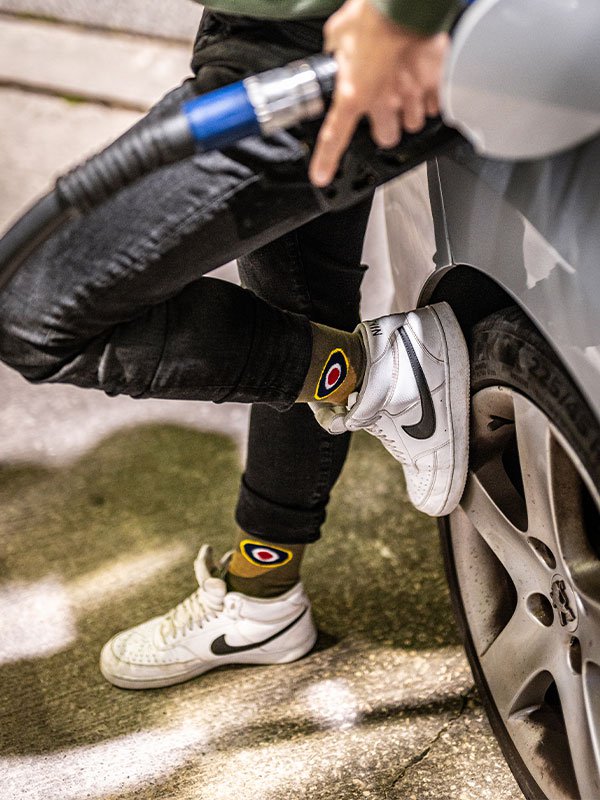
Il Boeing B-17 Flying Fortress è un bombardiere pesante quadrimotore sviluppato negli anni '30 per la United States Air Force. Era un bombardiere a lungo raggio relativamente veloce, ad alta quota, con un pesante armamento difensivo, inizialmente a scapito di carichi utili maggiori. Con il primo prototipo che volava con successo nel luglio 1935, un giornalista sulla scena lo descrisse come una "fortezza volante da 15 tonnellate" riferendosi al numero di mitragliatrici che sporgono. Boeing si è affrettata a capitalizzare su questo e ha registrato il nome per l'uso. Il prototipo non solo superava i requisiti USAF, ma era anche più veloce e aveva un'autonomia maggiore rispetto alla concorrenza bimotore di Douglas e Martin. Ma pochi mesi dopo, durante il secondo volo di valutazione, l'aereo ha subito un incidente mortale a causa di un errore umano. Mentre il corpo aereo era ancora entusiasta, la concorrenza ricevette ingenti ordini per i suoi bombardieri medi, mentre la Boeing dovette accontentarsi di costruirne solo 13 per ulteriori test dell'esercito. Poiché Boeing continuava a lavorare sodo su importanti miglioramenti di ulteriori varianti, iniziarono ad arrivare più ordini entro la fine del 1937 due gruppi di bombardamenti costieri statunitensi lo operavano. Ma sarebbe stato l'inizio della seconda guerra mondiale che avrebbe portato ordini a centinaia, con il B-17 a metà guerra che deteneva il record per il tasso di produzione più alto per qualsiasi aereo di grandi dimensioni. Il B-17 era impiegato principalmente dall'USAF nella campagna di bombardamenti diurni contro obiettivi strategici tedeschi - era già in uso dalla RAF all'inizio del 1941, prima che gli Stati Uniti si unissero ufficialmente alla lotta in Europa. Non appena nel 1943, l'Ottava Air Force statunitense, con base nell'Inghilterra centrale, orientale e meridionale, e la Fifteenth Air Force, con sede in Italia, completarono i bombardamenti notturni del Bomber Command della RAF per aiutare a garantire la superiorità aerea in preparazione all'invasione di Francia nel 1944. Prima di essere sostituito dal B-24 e successivamente dal B-29, il B-17 ha avuto un ruolo anche nelle prime fasi del teatro di guerra del Pacifico, con oltre 150 aerei operanti nella regione. Sebbene si sia sviluppato una reputazione di robustezza basata su storie e foto di B-17 gravemente danneggiati che tornavano sani e salvi alla base, al culmine del conflitto europeo l'aspettativa di vita media del B-17 Flying Fortress era di sole 11 missioni. Degli oltre 12.000 costruiti, più di un terzo andò perso durante le missioni di combattimento. Il Memphis Belle iniziò come qualsiasi altro B-17 e trovò un indirizzo di guerra permanente con il 324th Bomb Squadron presso la RAF Bassingbourn in Inghilterra. È stato chiamato dal pilota Robert Morgan pensando alla sua dolce metà, residente a Memphis, nel Tennessee, ispirato dal nome di una barca nel film del 1942 "Lady for a Night". Volò per la sua prima missione nel novembre 1942 e completò 25 missioni di successo prima di essere riportato negli Stati Uniti nel giugno 1943. Successivamente ispirò la realizzazione di due film: un film documentario del 1944, Memphis Belle: A Story of una fortezza volante e il film hollywoodiano del 1990, Memphis Belle. Nel 2005 è iniziato il restauro completo presso il National Museum of the U.S. Air Force a Dayton Ohio, dove è in mostra dal 2018. 80% cotone pettinato, 17% poliammide, 3% elastan. Usiamo maglieria senza cuciture per creare un calzino senza punti. Lavare al rovescio (40ºC/100ºF max). Non asciugare in asciugatrice, stirare, candeggiare o lavare a secco.The Boeing B-17 Flying Fortress is a four-engined heavy bomber developed in the 1930s for the United States Air Force. It was a relatively fast, high-flying, long-range bomber with heavy defensive armament, initially at the expense of bigger payloads. With the first prototype flying successfully in July 1935, a reporter at the scene described it as a '15-ton flying fortress' referring to the number of machine guns sticking out. Boeing was quick to capitalize on that and trademarked the name for use. The prototype not only exceeded the USAF requirements but was also faster and had a longer range than the twin-engined competition from Douglas and Martin. But a few months later on the second evaluation flight, the aircraft suffered a fatal crash due to human error. While the air corps were still enthusiastic, the competition received large orders for their medium bombers, while Boeing had to settle for only 13 to be built for further army testing.As Boeing continued working hard on major improvements of further variants, more orders started coming in and by the end of 1937 two U.S. coastal bombardment groups were operating it. But it would be the onset of World War II that would bring orders by the hundreds, with the B-17 by mid-war holding the record for the highest production rate for any large aircraft.The B-17 was primarily employed by the USAF in the daylight bombing campaign against strategic German targets - it was already in use by the RAF in early 1941, before the U.S officially joined the fight in Europe. As soon as 1943, the U.S. Eighth Air Force, based in central, eastern and southern England, and the Fifteenth Air Force, based in Italy, complemented the RAF Bomber Command's night-time bombing to help secure air superiority in preparation for the invasion of France in 1944. Before being replaced by the B-24 and later the B-29, the B-17 also played a role in the early stages of the Pacific war theatre, with more than 150 aircraft operating in the region.Although it developed a reputation for toughness based on stories and photos of badly damaged B-17s safely returning to base, at the peak of the European conflict the average life expectancy of the B-17 Flying Fortress was only 11 missions. Of the more than 12.000 built more than a third were lost during combat missions.The Memphis Belle started off like any other B-17 and found a permanent war address with the 324th Bomb Squadron at England’s RAF Bassingbourn. It was named by pilot Robert Morgan with his sweetheart in mind, who was a Memphis, Tennessee resident - inspired by the name of a boat in the 1942 film 'Lady for a Night'. It flew out for her first mission in November 1942 and completed 25 successful missions before being flown back to the U.S. in June 1943. It then went on to inspire the making of two motion pictures: a 1944 documentary film, Memphis Belle: A Story of a Flying Fortress and the 1990 Hollywood feature film, Memphis Belle. In 2005 full restoration began at the National Museum of the U.S. Air Force in Dayton Ohio, where it has been on display since 2018. 80% Combed Cotton, 17% Polyamide, 3% Elastane.We use seamless knitting to create a sock with no stitches. Wash inside out (40ºC/100ºF max). Do not tumble dry, iron, bleach or dry clean.
Traduzione automaticaLingua originale
Peso
55g
Materiale
Katoen, Ijzer
Colore
Groen
Prodotto in
Portogallo
Sede del brand
Portogallo
Orderchamp verifica e monitora attentamente tutti i brand presenti sulla piattaforma
Orderchamp funge da intermediario quando si acquista da questo brand, il che significa che interverrà come mediatore in caso di controversie relative all'ordine con questo brand
Il pagamento viene effettuato a Orderchamp e sarà trasferito al brand solo dopo che l'ordine sarà stato ricevuto con successo
Se riscontra problemi con questo prodotto, segnali il problema e provvederemo a indagare
Heel Tread è un marchio unico di calze che trae ispirazione da una delle più grandi passioni dell'uomo.
La nostra collezione è un tributo ad alcune delle icone automobilistiche più famose al mondo. Progettiamo calzini per quelli che saltano un colpo quando passa qualcosa di esotico, per quelli che guardano oltre le ruote e vedono l'arte. Dai fari, dalle prese d'aria e dal patrimonio, otteniamo motivi, trame e colori.
Un marchio che ti permette di portare le tue passioni con te ovunque, anche a letto.
Progettato e prodotto in Portogallo, utilizziamo la lavorazione a maglia senza cuciture per creare un calzino senza punti. Con 80% cotone pettinato, 17% poliammide e 3% elastan, bello dentro e fuori. Dopo averli indossati alcune volte, non potrai più tornare a nient'altro.