





















































The Unemployed Philosophers Guild
Breda, Holland


The Unemployed Philosophers Guild tilbyder 117 produkter. Tilmeld dig for at se mere.
The Unemployed Philosophers Guild sælger

Om The Unemployed Philosophers Guild
Hvorfor og hvordan i The Unployed Philosophers Guild
Oprindelsen af de arbejdsløse filosofferlaug er indhyllet i mystik. Nogle beretninger sporer laugets fødsel til Athen i sidste halvdel af det 4. århundrede fvt. Angiveligt blev flere mindre filosoffer trætte af den endeløse sokratiske dialog, der var endemisk i deres fag, og vendte sig til at fremstille husholdningsredskaber og legetøj. (Derfor påstandene om, at Sokrates fik sin hemlock-gift fra en kalk designet af et laug, selvom en heftig debat omgiver spørgsmålet om, hvorvidt det var en "forsvindende" kalk.)
Andre hævder, at UPG stammer fra højmiddelalderen, hvor Philosophers Guild trådte ind i handelsverdenen ved at sælge modbydelige pjecer til pilgrimme, der stod over for lange køer til toilettet. Forretningen boomede indtil 1211, da pave Innocentius III fordømte publikationerne. Ikke overraskende førte dette til øget salg, selvom halvdelen af vores medlemskab blev brændt på bålet.
For nylig har revisionistiske historikere udpeget laugets fødsel til dengang, det stadig var fedt at bo i New York Citys Lower East Side. To brødre vendte deres indre kreativitet og kærlighed til at betale husleje mod at opfylde folks behov for fingerdukker, varme tøfler, kaffekopper og at tude med ting. The Why and How of The Unemployed Philosophers Guild
The origins of the Unemployed Philosophers Guild are shrouded in mystery. Some accounts trace the Guild's birth to Athens in the latter half of the 4th century BCE. Allegedly, several lesser philosophers grew weary of the endless Socratic dialogue endemic in their trade and turned to crafting household implements and playthings. (Hence the assertions that Socrates quaffed his hemlock poison from a Guild-designed chalice, though vigorous debate surrounds the question of whether it was a "disappearing" chalice.)
Others argue that the UPG dates from the High Middle Ages, when the Philosophers Guild entered the world of commerce by selling bawdy pamphlets to pilgrims facing long lines for the restroom. Business boomed until 1211 when Pope Innocent III condemned the publications. Not surprisingly, this led to increased sales, even as half our membership was burned at the stake.
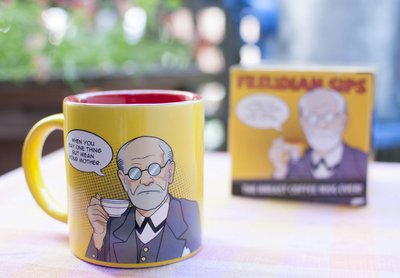
More recently, revisionist historians have pinpointed the birth of the Guild to the time it was still cool to live in New York City's Lower East Side. Two brothers turned their inner creativity and love of paying rent towards fulfilling the people's needs for finger puppets, warm slippers, coffee cups, and cracking up at stuff.
Oprindelsen af de arbejdsløse filosofferlaug er indhyllet i mystik. Nogle beretninger sporer laugets fødsel til Athen i sidste halvdel af det 4. århundrede fvt. Angiveligt blev flere mindre filosoffer trætte af den endeløse sokratiske dialog, der var endemisk i deres fag, og vendte sig til at fremstille husholdningsredskaber og legetøj. (Derfor påstandene om, at Sokrates fik sin hemlock-gift fra en kalk designet af et laug, selvom en heftig debat omgiver spørgsmålet om, hvorvidt det var en "forsvindende" kalk.)
Andre hævder, at UPG stammer fra højmiddelalderen, hvor Philosophers Guild trådte ind i handelsverdenen ved at sælge modbydelige pjecer til pilgrimme, der stod over for lange køer til toilettet. Forretningen boomede indtil 1211, da pave Innocentius III fordømte publikationerne. Ikke overraskende førte dette til øget salg, selvom halvdelen af vores medlemskab blev brændt på bålet.
For nylig har revisionistiske historikere udpeget laugets fødsel til dengang, det stadig var fedt at bo i New York Citys Lower East Side. To brødre vendte deres indre kreativitet og kærlighed til at betale husleje mod at opfylde folks behov for fingerdukker, varme tøfler, kaffekopper og at tude med ting. The Why and How of The Unemployed Philosophers Guild
The origins of the Unemployed Philosophers Guild are shrouded in mystery. Some accounts trace the Guild's birth to Athens in the latter half of the 4th century BCE. Allegedly, several lesser philosophers grew weary of the endless Socratic dialogue endemic in their trade and turned to crafting household implements and playthings. (Hence the assertions that Socrates quaffed his hemlock poison from a Guild-designed chalice, though vigorous debate surrounds the question of whether it was a "disappearing" chalice.)
Others argue that the UPG dates from the High Middle Ages, when the Philosophers Guild entered the world of commerce by selling bawdy pamphlets to pilgrims facing long lines for the restroom. Business boomed until 1211 when Pope Innocent III condemned the publications. Not surprisingly, this led to increased sales, even as half our membership was burned at the stake.
More recently, revisionist historians have pinpointed the birth of the Guild to the time it was still cool to live in New York City's Lower East Side. Two brothers turned their inner creativity and love of paying rent towards fulfilling the people's needs for finger puppets, warm slippers, coffee cups, and cracking up at stuff.
Maskinoversættelse
Originalsprog
Tilmeld dig og begynd at handle!
- Lave minimumsordrebeløb
- Én checkout for flere brands
- Køb nu, betal op til 60 dage senere